Robin has always composed and arranged music. Some of our regular readers may remember the, 'Fandango in the Fridge' post...
Recently he has been extremely busy preparing many pieces for download with one simple click.
There are now nearly 60 such pieces available from Sheet Music Plus, for a variety of instruments.
The majority are guitar based, either solo or duo, but there are also arrangements for guitar and voice, flute and guitar, string quartet, piano and many more!
Many of the pieces are original compositions, such as, 'Return to Islay', or, 'Canzone', both for solo guitar, but also original compositions for guitar duos such as, 'Esercizio No.1 'Tarantella' for two guitars'.
For those with an interest in flamenco guitar you could try, 'Fiesta de Xabia' which is a fiery and lively piece.
However, there are also piano pieces, 'Joydance' being one.
Arranging music has played a huge role in Robin's life as a musician and he has always spent a great deal of time arranging, performing and recording the pieces of historical giants within the world of classical music. Some examples are, 'Prelude No 1 from The Well-Tempered Clavier, J.S.Bach, 'Sonata L.483 for solo guitar', Domenico Scarlatti, 'Rigaudon (arranged for two guitars)', Georg Frederic Handel, 'Escorregando (arranged for flute & Guitar)', Ernesto Nazareth, 'Pavane (Op.50 arranged for two guitars)', Gabriel Faure, and many, many more!
Traditional music, whether, Irish, or Christmas, can also be found.
There are too many pieces to mention individually here, but please feel free to have a look around on Sheet Music Plus and check back frequently as new compositions and arrangements are being added all the time.
If you feel a few Skype lessons could help get your fingers around some of the trickier pieces, well, just send me a message, and if there's any requests for a particular piece, well, you only have to ask.
Showing posts with label Scarlatti. Show all posts
Showing posts with label Scarlatti. Show all posts
Wednesday, March 14, 2018


Saturday, October 22, 2016
Ritual Fire Dance - Robin Hill & Peter Wiltschinsky New Release

It features an eclectic mix of composers including Domenico Scarlatti, Fernando Sor, Felix Mendelssohn, Pierre Petit, Mario Castelnuovo-Tedesco, Mauro Guiliani, Manuel de Falla, Jan Marten Komter, Robin Hill and Peter Wiltschinsky.
The album also features a traditional Jota, arranged by Hill/Wiltschinsky and two Elizabethan lute duets, the first, Le Rossignol is anonymous and the second, My Lord Chamberlian's Galliard by John Dowland.
The opening Scarlatti sonata was the product of many hours recording and finally the duo got it to their satisfaction. Robin sprang out of his seat to celebrate, went straight to an upright piano in the corner of the room and started to play some boogie-woogie. After some time an inexperienced, stand-in engineer announced to the studio, "You'll be pleased to hear I recorded that." "Not over the Scarlatti I hope?" replied Robin.
Unfortunately it was...
The duo had to start the process all over again, but a fine version resulted.
After finally getting the second Scarlatti recording the duo decided to have a break, as it was late in the evening by this point. They visited a local pub, had a few beers and returned to the studio where they then recorded Felix Mendelssohn's beautiful 'Song Without Words'. I feel this actually added a certain mellow dimension to the recording.
For some inexplicable reason, during the recording of Mauro Guiliani's Variazioni Conertanti, track 13, Robin's microphone was picking up the friction between his shirt and guitar quite loudly. After much experimentation he eventually took his shirt off and recorded the track bare chested which seemed to solve the problem!
The traditional Jota, track 3, with its blistering triplet variation was recorded first take!
The Ritual Fire Dance, track 15, was played for many years by the duo as the final item on their programme and always elicited an encore.
You can hear excerpts of this album on iTunes, Amazon and all the usual digital outlets.
Here are the liner notes, by John W Duarte:
Notes by John W. Duarte
Spain is the only country in which the guitar, in its various evolutionary forms, has played an uninterrupted part in the national music culture, yet the common description of the guitar as “Spanish” does not truly accord with the historical facts. The early (four and five-course) guitars were in use throughout Europe, the instrument in its present “classic” form probably first appeared in Italy or Austria, and only in the last decades of the 19th century and the first few of the 20th might it be said that the guitar’s centre of gravity lay firmly in Spain. Andrés Segovia reminded the rest of the world that the guitar is a beautiful and resourceful instrument, and that they were wrong in having allowed it to fall into neglect. The lesson was quickly learnt and the guitar resumed its internationality; it is now a “world” instrument in every respect, but it is from Europe that its 20th century gospel has spread.
The guitar, like the keyboard and the harp, is both a melodic and a harmonic instrument, which permits it to “borrow” music written for other media, and to present it with a fresh face. Most of Domenico Scarlatti’s 555+ sonatas for the harpsichord (another plucked string instrument) were written in Iberia, to test the mettle of his pupil Maria Barbara (a Portuguese princess who later became a Spanish queen). The didactic purpose of the Sonata K141 is clear, the rapidly reiterated notes: in some other sonatas Scarlatti marked such passages: “mutandi i detti” (alternate the fingers), which is exactly what a guitarist does here! Duets for two plucked-string fretted instruments have been a companionable activity for many centuries, a Canone a due liuti is among the works of Francisco Canova da Milano (1497-1543) and, such instruments being portable, they have been beloved of friendly amateurs - like Jane Pickering, who enjoyed making music with her friends and in whose lute-book (c1616) Le rossignol (the nightingale) is to be found. It is an ‘equal’ duet, in which the two players ‘converse’ on an equal footing. Duets in which both players share the same instrument (e.g. four hands on one piano) came later. John Dowland, the greatest lutenist of his time, may have been the first in the field with My Lord Chamberlaine his Galliard, “an invention for two to play upon one lute”, another ‘equal’ duet, in which the players balletically exchange roles - but not here. The music is sufficient in itself and the humour is in any case not visible in a recording!
Much keyboard music translates to two guitars, and when it is of a romantic character the marriage is a particularly happy one, as it is with the Song without Words Op19/1 of Mendelssohn. His eight cycles of Lieder ohne Worte are a recognition that an instrument, no less than a voice, can ‘sing’, as one guitar does here whilst the other provides the accompaniment. The sound of the guitar is rooted in the consciousness of most Spanish composers, so that two guitars can convincingly project the essence of the exciting Ritual Fire Dance from Falla’s ballet El amor bruno (Love the Magician), without need of the weight of sound of the original orchestral form.
Traditional songs and dances are not the special ‘property’ of any particular musical medium, but may happily be dressed in a wide variety of ways. The Irish folk song, The Lark in the Morning, with its bird-like trills, and the Jota, a Spanish dance whose simple ground opened the door to some flamboyant variations, provide excellent and contrasted examples of what may be added to such material through creative arrangements for two guitars.
When it comes to music that is directly written for the guitar, no-one does it more effectively than a composer who plays the instrument and knows its capabilities intimately. Fernando Sor, a Spaniard whose career carried him as far east as Russia and as far west as London, wrote 13 Fantasias of which the Fantasia Op.54 bis is the only one for guitar duo; the theme of the final movement was used by the Danish choreographer Auguste Bournonville in his ballet The Toreador (1840). Mauro Giuliani, an Italian virtuoso who moved to Vienna to enhance his career - and back again to Italy to escape the arm of the Viennese law, is often referred to as Sor’s “rival”; be that as it may, they were the two leading players of their time. Giuliani’s prolific compositional output (he had an avid Viennese salon public to satisfy) included many sets of variations; In the Variazioni concertanti the theme (probably Giuliani’s own) is preceded by an imposing introduction and followed by six contrasting variations in which he exploits the technical potential of two virtuoso players - who may originally have been Giuliani himself and his daughter Emilia.
Among the later guitarist/composers who have written for the duo medium are: Dimitris Fampas, whose romantic and ‘stateless’ Fantasie (dedicated to the Greek duo Evangelos and Liza) bears no trace of his Greek origins, Jan Marten Komter, the Managing Director of a Dutch chemical firm, amateur guitarist and flautist, the composer of the Milan Suite, with its overt references to the pavans of its eponym, the 16th-century Spanish vinuelista Luis Milan, and Robin Hill, whose Rondo for two guitars is in the classical mould (with earlier Iberian echoes of Padre Antonio Solar), and whose charming Canzone is one of a set of three studies for two guitars.
The remaining music on this disc is by composers that did not play the guitar but who nevertheless wrote generously for it. Jean Absil, a Belgian, composed for most musical media and his style ranged from the uncompromising to the accessible - as it is in his Three Pieces (1963) for guitar duo, from which the Musette comes; the pieces carry “baroque” titles but the music fulfils neither the promise nor the threat (according to your point of view!) of matching pastiche. Pierre Petit, erstwhile Director of Light Music for French Radio and TV, critic and composer, was one of many who were inspired to write for two guitars by the Duo Presti-Lagoya (which ended with the death of Ida Presti in 1967). The driving rhythms of the outer sections of his Toccata are interrupted by two slow, jazz-tinged episodes, and the work ends in a blaze of virtuosity. Mario Castelnuovo-Tedesco, a refugee from Mussolini’s Italy, emigrated to the U.S.A., finally settling in Beverly Hills. In his prodigious output of music he was unusually generous to the guitar; in this the original catalyst was Andrés Segovia, one of those who sponsored his entry into the U.S.A., but in the last year of his life he was equally captivated by Presti-Lagoya for whom he wrote (amongst other things) Les guitares bien-temperees, Op.199 (1962), prelude-and-fugue pairings in all major and minor keys. In this he followed the example of Bach’s Das Wohltemperierte Klavier but the pairings are differently ordered thus the Prelude and Fugue in F# minor are No. 13 in the series, not No. 14 as Bach had them. Neither is the musical language of Bach, it is Castelnuovo-Tedesco’s own.
John W. Duarte
Monday, June 29, 2015
Robin Hill's Guitar Gymnasium Podcast No 2 - The Hill/Wiltschinsky Guitar Duo Part 1
After the more technical podcast No.1 on right hand technique which can be found here, Podcast No.2 looks at the history of the Hill/Wiltschinsky Guitar Duo with some musical examples and also some inside information on the murkier side of the music industry...
Robin's Book, 'The Guitar Gymnasium' can be found here.
During the podcast Robin mentions the duo's first album, which originally started with the Bach Invention No.8, there is a reissue of it here.
And here are the sleeve notes from the initial release:
Colin Cooper - Sleevenotes Hill/Wiltschinsky debut album on Hyperion Records
The brilliance of Ida Presti and Alexandre Lagoya set standards of duo guitar playing that have seldom been equalled. The form is a difficult one. Accuracy and precision are of course prime essentials, but the best duos are welded together by something more: a unity of purpose, a spirit of excitement and even adventure, an ability not only to play as one instrument but also to think as one musician.
Robin Hill and Peter Wiltschinsky, on the evidence of this recording, have that rare capacity. Their performances are alive, zestful, invigorating. It will make new friends for their exuberant playing, and new friends too for the guitar duo form, in which so much can be accomplished.
Some of the pieces are familiar; some not so familiar, though they deserve to be. All are hugely enjoyable. Hill and Wiltschinsky demonstrate their very wide range by adapting their style successfully to every new requirement, from the English lute tradtion of John Johnson to the 20th century French composer Pierre Petit. The Bach Invention that opens the recital could scarcely have been better chosen; light, airy, fast, it nourishes as it dazzles - perfection in 44 seconds (but length is never a prerequisite of great music). And has the Queen of Sheba ever made so exhilarating an arrival?
It gives me a lot of pleasure to be able to introduce this remarkable record - as much pleasure as I think it is going to give those who listen to it.
Podcast No.2:
Tuesday, June 08, 2010
Manuel de Falla and his House
The music of Manuel de Falla is known and loved throughout the world and has influenced the careers of many musicians.
Robin is no exception.
The Hill/Wiltschinsky Guitar Duo have recorded many of his pieces.
The Teldec CD 'Virtuoso Guitar' features 'El Amor Brujo', La Vida Breve' and 'El Sombreo de Tres Picos' (Three Cornered Hat) plus many other incredible pieces by Tarrega, Albeniz, Scarlatti etc, with some of the tracks performed by Wolfgang Lendle.
Plus I have mentioned Falla here on the blog a number of times, 'Alicia de Larrocha, the Ritual Fire Dance and a Maths Exam' and amusingly here on, 'Hill/Wiltschinsky - Pump It or Dump It' and 'Manuel de Falla's, 'Miller's Dance' and the Solar System'.
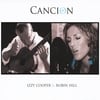
But Robin has also collaborated with other musicians and this post refers to one such performance, 'Review: Robin Hill and Izzy Cooper'.
So as you can see, Manuel de Falla has been a major part in Robin's life, so he was delighted to find himself in Falla's birthplace, Cadiz.
So you can imagine his excitement when he turned a corner and came across this bookshop:
.jpg)
Then, right next door he spotted a plaque:

And found himself standing in front of Manuel de Falla's home, (Upper floors):
.jpg)
Falla's birthplace overlooks a beautiful square and this is part of it:
.jpg)
Over the day I had many 'phone calls as Robin described each new discovery, even down to this glorious fountain, complete with turtles:

Cadiz is certainly a place I also wish to visit to pay my own respects to the wonderful composer, Manuel de Falla.
Robin is no exception.
The Hill/Wiltschinsky Guitar Duo have recorded many of his pieces.
The Teldec CD 'Virtuoso Guitar' features 'El Amor Brujo', La Vida Breve' and 'El Sombreo de Tres Picos' (Three Cornered Hat) plus many other incredible pieces by Tarrega, Albeniz, Scarlatti etc, with some of the tracks performed by Wolfgang Lendle.
Plus I have mentioned Falla here on the blog a number of times, 'Alicia de Larrocha, the Ritual Fire Dance and a Maths Exam' and amusingly here on, 'Hill/Wiltschinsky - Pump It or Dump It' and 'Manuel de Falla's, 'Miller's Dance' and the Solar System'.
But Robin has also collaborated with other musicians and this post refers to one such performance, 'Review: Robin Hill and Izzy Cooper'.
So as you can see, Manuel de Falla has been a major part in Robin's life, so he was delighted to find himself in Falla's birthplace, Cadiz.
So you can imagine his excitement when he turned a corner and came across this bookshop:
.jpg)
Then, right next door he spotted a plaque:

And found himself standing in front of Manuel de Falla's home, (Upper floors):
.jpg)
Falla's birthplace overlooks a beautiful square and this is part of it:
.jpg)
Over the day I had many 'phone calls as Robin described each new discovery, even down to this glorious fountain, complete with turtles:

Cadiz is certainly a place I also wish to visit to pay my own respects to the wonderful composer, Manuel de Falla.
Wednesday, April 16, 2008
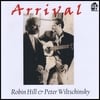
Track 1 - 'Arrival' - Arrival of the Queen of Sheba - G.F.Handel
Track one on 'Arrival' is appropriately, 'Arrival of the Queen of Sheba' by George Frideric Handel (1685-1759).
Handel was a German-born Baroque composer famous for his operas, oratorios and concerti grossi.
He was born in Halle in 1685, the same year as Johann Sebastian Bach and Domenico Scarlatti.
Handel showed considerable musical talent, on both harpsichord and pipe organ, from an early age, and had already begun composing by the age of 9.
Although born in Germany he spent most of his adult life living in England and made his home permanently in London in 1712.
The house that he rented, on Brook Street, has since become a museum, 'Handel House', and is well worth a visit.
The house, coincidentally, is next door to one that Jimi Hendrix occupied for some time, thus combining two of Robin's greatest musical influences within a few feet of each other!
It was during this period that many of Handel's greatest works were composed, Messiah, Water Music and Music for the Royal Fireworks to name just a few.
The Oratorio became the national musical speciality owing mainly to Handel's efforts.
The 'Arrival of the Queen of Sheba' comes from the oratorio 'Solomon', which was first performed in London in 1748.
Handel's scoring of this piece was originally for two oboes and strings, but the dialogue between the two oboes works effectively on two guitars, as does the remaining string writing.
This is one of Robin's first arrangements for two guitars.
For those interested in details, at the time of this recording both Robin and Peter Wiltschinsky were playing guitars made by the luthier 'David Rubio'.
For now though, go over and have a listen to the 'Arrival of the Queen of Sheba', and as one review said, "Has the Queen of Sheba ever made such an exhilarating arrival?"
Handel was a German-born Baroque composer famous for his operas, oratorios and concerti grossi.
He was born in Halle in 1685, the same year as Johann Sebastian Bach and Domenico Scarlatti.
Handel showed considerable musical talent, on both harpsichord and pipe organ, from an early age, and had already begun composing by the age of 9.
Although born in Germany he spent most of his adult life living in England and made his home permanently in London in 1712.
The house that he rented, on Brook Street, has since become a museum, 'Handel House', and is well worth a visit.
The house, coincidentally, is next door to one that Jimi Hendrix occupied for some time, thus combining two of Robin's greatest musical influences within a few feet of each other!
It was during this period that many of Handel's greatest works were composed, Messiah, Water Music and Music for the Royal Fireworks to name just a few.
The Oratorio became the national musical speciality owing mainly to Handel's efforts.
The 'Arrival of the Queen of Sheba' comes from the oratorio 'Solomon', which was first performed in London in 1748.
Handel's scoring of this piece was originally for two oboes and strings, but the dialogue between the two oboes works effectively on two guitars, as does the remaining string writing.
This is one of Robin's first arrangements for two guitars.
For those interested in details, at the time of this recording both Robin and Peter Wiltschinsky were playing guitars made by the luthier 'David Rubio'.
For now though, go over and have a listen to the 'Arrival of the Queen of Sheba', and as one review said, "Has the Queen of Sheba ever made such an exhilarating arrival?"
Monday, May 28, 2007
Domenico Scarlatti and the Honky Tonk Piano....
As we have been talking about 'incidents' in the recording studio, I remembered another one, that happened a few years earlier.
Again, it was Hill/Wiltschinsky, and they were recording an album in Yorkshire. 'Music of Europe'.
On this particular day, their attention was solely on Scarlatti's sonata K141.
This is a highly intricate toccata like movement which places severe demands on the players - especially at the tempo that Hill/Wiltschinsky perform it.
The duo pride themselves on their recordings being pretty much what you will hear in concert. No editing was done in this recording, the moment is simply captured again and again, until they are satisfied.
Due to the complexity of the piece the duo spent an entire day recording and re-recording this one piece.
As day turned into evening they tried one more time to capture the sound they wanted.
As the final note disappeared into the air they knew they had achieved their objective.
Both Robin and Peter have an uncanny telepathic understanding when it comes to music.
The relief, and release of tension was incredible, and Robin leapt up, ran to the other side of the studio, and thrashed out some honky tonk, on an idle piano.
"That was great", said the sound engineer, "You'll be pleased to hear I recorded it".
"I hope you didn't do it over the Scarlatti", replied Robin, joking.
Errr, whoops, he had......
What do they do? Shout, scream, jump up and down.
No.
The duo pick their guitars up and start all over again.
Again, it was Hill/Wiltschinsky, and they were recording an album in Yorkshire. 'Music of Europe'.
On this particular day, their attention was solely on Scarlatti's sonata K141.
This is a highly intricate toccata like movement which places severe demands on the players - especially at the tempo that Hill/Wiltschinsky perform it.
The duo pride themselves on their recordings being pretty much what you will hear in concert. No editing was done in this recording, the moment is simply captured again and again, until they are satisfied.
Due to the complexity of the piece the duo spent an entire day recording and re-recording this one piece.
As day turned into evening they tried one more time to capture the sound they wanted.
As the final note disappeared into the air they knew they had achieved their objective.
Both Robin and Peter have an uncanny telepathic understanding when it comes to music.
The relief, and release of tension was incredible, and Robin leapt up, ran to the other side of the studio, and thrashed out some honky tonk, on an idle piano.
"That was great", said the sound engineer, "You'll be pleased to hear I recorded it".
"I hope you didn't do it over the Scarlatti", replied Robin, joking.
Errr, whoops, he had......
What do they do? Shout, scream, jump up and down.
No.
The duo pick their guitars up and start all over again.
Sunday, May 27, 2007
Recording For Teldec With Sutured Finger....
After reading, 'Painful gig story from Don Mincher', over on, 'Jason Heath's Double Bass Blog', and leaving a comment, I feel I should tell the whole story here.
Some years ago, the Hill/Wiltschinsky Guitar Duo were asked by Teldec to record two new albums, 'Les Deux Amis' and 'The Sound of Strings', with a five week break between each album.
This is, of course, an honour, from such a well respected label.
The duo obviously spent many weeks in preparation for their trip to Berlin.
One week prior to departure, Robin, who is so careful with his hands, cut the index finger of his left hand, opening a tin can.
This required a visit to the local Accident and Emergency department, where a very anxious doctor, was given the job of suturing a musician's finger....
There was no way Robin would cancel the recording.
He continued his rehearsal as well as he could, and a few days later, set off for Berlin.
The duo quickly got into the recording, and Robin was able to transcend the pain and focus on some rather demanding music. The sound engineer found the blood and sweat (but no tears) rather difficult to deal with, but he just had to focus on the mixing desk.
The music ranged from 'Suite Italiana', composed for the duo by Mario Gangi, Fernando Sor, Pierre Petit, J.S.Bach, Handel, Mendelssohn, Scarlatti, Rossini, Faure, Falla, Tarrega and many more, plus their own compositions.
For Robin, the main problem was barring, as the left index finger is under a lot of pressure, but he managed it.
The duo were so delighted when the last piece was finally recorded that they celebrated by walking into Berlin. They didn't appear to notice that it was a 12 mile hike, each way, until they got up next morning to discover the blisters - on their feet...
Some years ago, the Hill/Wiltschinsky Guitar Duo were asked by Teldec to record two new albums, 'Les Deux Amis' and 'The Sound of Strings', with a five week break between each album.
This is, of course, an honour, from such a well respected label.
The duo obviously spent many weeks in preparation for their trip to Berlin.
One week prior to departure, Robin, who is so careful with his hands, cut the index finger of his left hand, opening a tin can.
This required a visit to the local Accident and Emergency department, where a very anxious doctor, was given the job of suturing a musician's finger....
There was no way Robin would cancel the recording.
He continued his rehearsal as well as he could, and a few days later, set off for Berlin.
The duo quickly got into the recording, and Robin was able to transcend the pain and focus on some rather demanding music. The sound engineer found the blood and sweat (but no tears) rather difficult to deal with, but he just had to focus on the mixing desk.
The music ranged from 'Suite Italiana', composed for the duo by Mario Gangi, Fernando Sor, Pierre Petit, J.S.Bach, Handel, Mendelssohn, Scarlatti, Rossini, Faure, Falla, Tarrega and many more, plus their own compositions.
For Robin, the main problem was barring, as the left index finger is under a lot of pressure, but he managed it.
The duo were so delighted when the last piece was finally recorded that they celebrated by walking into Berlin. They didn't appear to notice that it was a 12 mile hike, each way, until they got up next morning to discover the blisters - on their feet...
Subscribe to:
Posts (Atom)











 Posts
Posts