Reviews
'As always, it was sheer pleasure to observe Robin Hill's remarkable fluent technique: everything looks easy when he plays it.' Colin Cooper- Classical Guitar Magazine -----
'Wonderful for their (Hill & Wiltschinsky) precision, touch and clarity of sound... refined virtuosity, the achievement of a long interpretive process.' Il Giornale D'Italia (Rome) -----
'I loved your CD and thought your technique and performance were fabulous...' Rick Wakeman
Showing posts with label Pierre Petit. Show all posts
Saturday, October 22, 2016
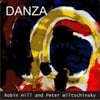
Ritual Fire Dance - Robin Hill & Peter Wiltschinsky New Release
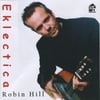
This album was recorded without any edits, and on one track minus a shirt...all the playing is real and as it happened! The cover photo was taken at Hampton Court Palace during a break from recording in the beer cellar for BBC Radio.
It features an eclectic mix of composers including Domenico Scarlatti, Fernando Sor, Felix Mendelssohn, Pierre Petit, Mario Castelnuovo-Tedesco, Mauro Guiliani, Manuel de Falla, Jan Marten Komter, Robin Hill and Peter Wiltschinsky.
The album also features a traditional Jota, arranged by Hill/Wiltschinsky and two Elizabethan lute duets, the first, Le Rossignol is anonymous and the second, My Lord Chamberlian's Galliard by John Dowland.
The opening Scarlatti sonata was the product of many hours recording and finally the duo got it to their satisfaction. Robin sprang out of his seat to celebrate, went straight to an upright piano in the corner of the room and started to play some boogie-woogie. After some time an inexperienced, stand-in engineer announced to the studio, "You'll be pleased to hear I recorded that." "Not over the Scarlatti I hope?" replied Robin.
Unfortunately it was...
The duo had to start the process all over again, but a fine version resulted.
After finally getting the second Scarlatti recording the duo decided to have a break, as it was late in the evening by this point. They visited a local pub, had a few beers and returned to the studio where they then recorded Felix Mendelssohn's beautiful 'Song Without Words'. I feel this actually added a certain mellow dimension to the recording.
For some inexplicable reason, during the recording of Mauro Guiliani's Variazioni Conertanti, track 13, Robin's microphone was picking up the friction between his shirt and guitar quite loudly. After much experimentation he eventually took his shirt off and recorded the track bare chested which seemed to solve the problem!
The traditional Jota, track 3, with its blistering triplet variation was recorded first take!
The Ritual Fire Dance, track 15, was played for many years by the duo as the final item on their programme and always elicited an encore.
You can hear excerpts of this album on iTunes, Amazon and all the usual digital outlets.
Here are the liner notes, by John W Duarte:
Notes by John W. Duarte
Spain is the only country in which the guitar, in its various evolutionary forms, has played an uninterrupted part in the national music culture, yet the common description of the guitar as “Spanish” does not truly accord with the historical facts. The early (four and five-course) guitars were in use throughout Europe, the instrument in its present “classic” form probably first appeared in Italy or Austria, and only in the last decades of the 19th century and the first few of the 20th might it be said that the guitar’s centre of gravity lay firmly in Spain. Andrés Segovia reminded the rest of the world that the guitar is a beautiful and resourceful instrument, and that they were wrong in having allowed it to fall into neglect. The lesson was quickly learnt and the guitar resumed its internationality; it is now a “world” instrument in every respect, but it is from Europe that its 20th century gospel has spread.
The guitar, like the keyboard and the harp, is both a melodic and a harmonic instrument, which permits it to “borrow” music written for other media, and to present it with a fresh face. Most of Domenico Scarlatti’s 555+ sonatas for the harpsichord (another plucked string instrument) were written in Iberia, to test the mettle of his pupil Maria Barbara (a Portuguese princess who later became a Spanish queen). The didactic purpose of the Sonata K141 is clear, the rapidly reiterated notes: in some other sonatas Scarlatti marked such passages: “mutandi i detti” (alternate the fingers), which is exactly what a guitarist does here! Duets for two plucked-string fretted instruments have been a companionable activity for many centuries, a Canone a due liuti is among the works of Francisco Canova da Milano (1497-1543) and, such instruments being portable, they have been beloved of friendly amateurs - like Jane Pickering, who enjoyed making music with her friends and in whose lute-book (c1616) Le rossignol (the nightingale) is to be found. It is an ‘equal’ duet, in which the two players ‘converse’ on an equal footing. Duets in which both players share the same instrument (e.g. four hands on one piano) came later. John Dowland, the greatest lutenist of his time, may have been the first in the field with My Lord Chamberlaine his Galliard, “an invention for two to play upon one lute”, another ‘equal’ duet, in which the players balletically exchange roles - but not here. The music is sufficient in itself and the humour is in any case not visible in a recording!
Much keyboard music translates to two guitars, and when it is of a romantic character the marriage is a particularly happy one, as it is with the Song without Words Op19/1 of Mendelssohn. His eight cycles of Lieder ohne Worte are a recognition that an instrument, no less than a voice, can ‘sing’, as one guitar does here whilst the other provides the accompaniment. The sound of the guitar is rooted in the consciousness of most Spanish composers, so that two guitars can convincingly project the essence of the exciting Ritual Fire Dance from Falla’s ballet El amor bruno (Love the Magician), without need of the weight of sound of the original orchestral form.
Traditional songs and dances are not the special ‘property’ of any particular musical medium, but may happily be dressed in a wide variety of ways. The Irish folk song, The Lark in the Morning, with its bird-like trills, and the Jota, a Spanish dance whose simple ground opened the door to some flamboyant variations, provide excellent and contrasted examples of what may be added to such material through creative arrangements for two guitars.
When it comes to music that is directly written for the guitar, no-one does it more effectively than a composer who plays the instrument and knows its capabilities intimately. Fernando Sor, a Spaniard whose career carried him as far east as Russia and as far west as London, wrote 13 Fantasias of which the Fantasia Op.54 bis is the only one for guitar duo; the theme of the final movement was used by the Danish choreographer Auguste Bournonville in his ballet The Toreador (1840). Mauro Giuliani, an Italian virtuoso who moved to Vienna to enhance his career - and back again to Italy to escape the arm of the Viennese law, is often referred to as Sor’s “rival”; be that as it may, they were the two leading players of their time. Giuliani’s prolific compositional output (he had an avid Viennese salon public to satisfy) included many sets of variations; In the Variazioni concertanti the theme (probably Giuliani’s own) is preceded by an imposing introduction and followed by six contrasting variations in which he exploits the technical potential of two virtuoso players - who may originally have been Giuliani himself and his daughter Emilia.
Among the later guitarist/composers who have written for the duo medium are: Dimitris Fampas, whose romantic and ‘stateless’ Fantasie (dedicated to the Greek duo Evangelos and Liza) bears no trace of his Greek origins, Jan Marten Komter, the Managing Director of a Dutch chemical firm, amateur guitarist and flautist, the composer of the Milan Suite, with its overt references to the pavans of its eponym, the 16th-century Spanish vinuelista Luis Milan, and Robin Hill, whose Rondo for two guitars is in the classical mould (with earlier Iberian echoes of Padre Antonio Solar), and whose charming Canzone is one of a set of three studies for two guitars.
The remaining music on this disc is by composers that did not play the guitar but who nevertheless wrote generously for it. Jean Absil, a Belgian, composed for most musical media and his style ranged from the uncompromising to the accessible - as it is in his Three Pieces (1963) for guitar duo, from which the Musette comes; the pieces carry “baroque” titles but the music fulfils neither the promise nor the threat (according to your point of view!) of matching pastiche. Pierre Petit, erstwhile Director of Light Music for French Radio and TV, critic and composer, was one of many who were inspired to write for two guitars by the Duo Presti-Lagoya (which ended with the death of Ida Presti in 1967). The driving rhythms of the outer sections of his Toccata are interrupted by two slow, jazz-tinged episodes, and the work ends in a blaze of virtuosity. Mario Castelnuovo-Tedesco, a refugee from Mussolini’s Italy, emigrated to the U.S.A., finally settling in Beverly Hills. In his prodigious output of music he was unusually generous to the guitar; in this the original catalyst was Andrés Segovia, one of those who sponsored his entry into the U.S.A., but in the last year of his life he was equally captivated by Presti-Lagoya for whom he wrote (amongst other things) Les guitares bien-temperees, Op.199 (1962), prelude-and-fugue pairings in all major and minor keys. In this he followed the example of Bach’s Das Wohltemperierte Klavier but the pairings are differently ordered thus the Prelude and Fugue in F# minor are No. 13 in the series, not No. 14 as Bach had them. Neither is the musical language of Bach, it is Castelnuovo-Tedesco’s own.
John W. Duarte
Monday, July 25, 2011
'Life of a Musician' - 5 Years of Blogging
Life of a Musician is 5 years old today!
So, I thought I would have a look back through some of the 717 posts and highlight a few that represent a cross section of the last 5 years.
To start with you might like to listen to some of the pieces in the player in the sidebar. If so, this post, 'Stories Behind the Music' tells you a little about each piece.
Also in the sidebar are some of our CDs which can be accessed by clicking the various links.
But apart from the music the whole point of this blog was to look behind the scenes at the life of a musician and to record some memories and thoughts from a career that has spanned more than 40 years...
'Accidents Happen: Part 1' seemed a good place to start.
And then there was, 'Part 2'.
I'm not saying Robin is accident prone but this post tells about the time he split his guitar - during a concert...and this one how he found himself, 'Recording for Teldec with a Sutured Finger'.
Travel obviously forms a huge part of the life of this musician. Generally this is an honour. He visits more countries each year than most people manage in a lifetime. But it isn't without its stresses.
We have had 'lost guitars', and more lost luggage than I care to remember, here's just one example, 'A Case of the Borrowed Tuxedo'.
But fun can be had, especially when live on radio in the US, 'Hill/Wiltschinsky - Pump It or Dump it'.
And you know you've been too New York frequently when this happens!
Occasionally I would add a more technical post such as, 'See the Sound Waves and Improve your Scales', or, 'Music Practice Tips - Classical Guitar'.
Of course many people want to know about being the 'wife' of a musician, which prompted this series of posts: 'The Wife of a Musician - Part 1 - The Music', and 'Part 2 - Travel', and for those really dedicated to the role of the wife of a musician you can find a few more links here.
But sometimes the blog posts just reflect what is happening at the time...how could I resist this one, 'Cabo San Lucas, Hard Rock Cafe and the Tale of an Iguana', or 'Manuel de Falla's, 'Miller's Dance', and the Solar System', or this one, 'Django Reinhardt, Stephane Grappelli and the Revolving Stage'.
No blog discussing the guitar would be complete without mentioning, 'Guitarists and Their B***** Nails'...
Finally, a few posts that have been particularly popular over the years, 'Sex, Drugs and Classical Music', 'Alicia de Larrocha, the Ritual Fire Dance and a Maths Exam' and 'Inspire Young Minds with Music'.
However, these are just a handful of the available posts, there are several hundred more, all of which can be found through the archives.
Many thanks to all those who have supported 'Life of a Musician' over the last 5 years and I hope you will continue to do so for many more to come.
Tuesday, May 20, 2008
Quiet in the Med, Interest in Cuckoo Clocks and Handling Handel
It has been remarkably quiet out in the Mediterranean sea today.
Other than hearing that Robin had enjoyed a very pleasant alfresco breakfast, on board Crystal Serenity, there has been little news.
I do know that the first of his two guitar concerts takes place tomorrow, so Robin will be hard at work preparing.
This lack of information left me with time to contemplate the latest batch of unusual Google searches.
Why has there been a sudden interest in cuckoo clocks?
A number of different people have recently been searching cuckoo clocks and found themselves here.
I can only assume it is due to one, or both, of these old posts.
The first was back in January 2007, 'Pierre Petit and the Cuckoo Clock Pendulum', which looked at Robin's uncanny ability to judge tempo, acquired after many years of foot tapping.
Or maybe it was, 'Cuckoo Clocks and Microphones', from 2006.
Either way, I hope they found what they were looking for.
There was another search that I haven't been able to figure out.
"Robin Handel you can't Handel Me"
The mind boggles with that one....
Thursday, April 24, 2008
Track 6 - 'Arrival' - Pierre Petit
Track 6 on 'Arrival' is 'Tarantelle' by Pierre Petit.
Every time I hear this piece I can't help laughing, but you will have to read on, to the end, to find out why.
'Tarantelle' along with 'Toccatta' are, in Robin's opinion, two of the greatest duo pieces written, and are certainly amongst the most difficult to play.
Pierre Petit studied at the Paris Conservatoire, and in the 1950's was made director of light music for the French radio and T.V. company ORTF. He was also a music critic for 'Parisien Libere' and 'Le Figaro'.
His compositions include the 'Suite for Four Cellos' (1945), 'Zadig' (a ballet, 1948), 'Concerto for Piano and Orchestra' (1956), and a 'Concerto for two Guitars and Orchestra' (1965), which was composed for the famous husband and wife duo, Ida Presti and Alexandre Lagoya.
In 1946 Petit won the much coveted composers' competition, the 'Prix de Rome'.
The 'Tarantelle' is a piece of music best avoided if you suffer from arachnophobia.
It has been suggested that the music depicts the frenzied dance of an unfortunate individual after they have been bitten by a deadly tarantula...
It is however also a joyful and ebullient piece of music, which in the first slow section quotes, 'Clair de Lune' by Claude Debussy.
As the piece progresses, you can certainly imagine a gyrating person as they suffer the consequences of the tarantula's venom.
What you can't hear, unless you purchase the track of course, is the end of the 'Tarantelle'.
This is where my amusement arises.
The Hill/Wiltschinsky Guitar Duo have frequently performed the 'Tarantelle', and usually, it is programmed at the end of the first half, as it has such a grand finale.
Naturally one wants to leave their audience keen to hear more.
The Hill/Wiltschinsky Guitar Duo are certainly not known for ever playing safe in live concerts.
Instead they constantly push themselves, and each other, to perform the most exciting version they can, whilst obviously maintaining accuracy.
A difficult balance to achieve.
Fuelled by concert adrenaline, it makes for a heady mix.
The 'Tarantelle' is therefore the perfect piece to stimulate the duo's virtuosity.
As the piece progresses it becomes more and more exciting, and on one occasion, Robin got rather over enthusiastic.
He knew the performance was going well and the audience were already stunned.
However, on the finale of the piece Robin executes a rapid drum roll on the side of his guitar, using both hands.
Robin was pleased with the fantastic percussive effect until he glanced down at his beautiful Rubio guitar and spotted a massive split in the Brazilian rosewood along the guitar's entire length.
During the interval he was able to inspect the damage, but there wasn't really a lot that could be done.
The entire second half of the concert was performed with a little more caution.
The Rubio was later repaired and restored to it's former glory.
So whilst Robin has been called, "the Jimi Hendrix of the classical guitar," I think we should add Pete Townshend to the list....
Go and have a listen, from the extract that you hear, it starts to become apparent, just how frenzied 'Tarantelle' becomes.
Saturday, April 12, 2008
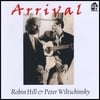
Robin Hill and Peter Wiltschinsky 'Arrival'
"Nothing is more beautiful than a guitar - save perhaps two."
Frederic Chopin
Here are the sleeve notes to the CD we have just released, 'Arrival'.
Written by the Editor of Classical Guitar Magazine, Colin Cooper:
"The brilliance of Ida Presti and Alexandre Lagoya set standards of duo guitar playing that have seldom been equalled. The form is a difficult one. Accuracy and precision are of course prime essentials, but the best duos are welded together by something more: a unity of purpose a spirit of excitement and even adventure, an ability not only to play as one instrument but also to think as one musician.
Robin Hill and Peter Wiltschinsky, on the evidence of this recording, have that rare capacity. Their performances are alive, zestful, invigorating. It will make new friends for their exuberant playing, and new friends too for the guitar duo form in which so much can be accomplished.
Some of the pieces are familiar; some not so familiar, though they deserve to be. All are hugely enjoyable. Hill and Wiltschinsky demonstrate their very wide range by adapting their style successfully to every new requirement, from the English lute tradition of John Johnson to the 20th century composer, Pierre Petit. The Bach invention could scarcely be better chosen; light, airy, fast, it nourishes as it dazzles - perfection in 45 seconds. And has the Queen of Sheba ever made such an exhilarating arrival?
It gives me much pleasure to introduce this remarkable record - as much pleasure as I think it will give to those who listen to it."
Colin Cooper
What more can I say?
Follow this link, or click on the picture in the side bar, to have a listen.
Next week I shall tell you a little about each piece of music, and also, the strange, and at times rather intriguing, history of this particular recording.
Subscribe to:
Posts (Atom)