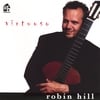
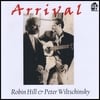
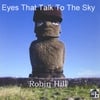
An update for all classical and jazz fans.
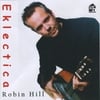
Recently Robin Hill's 'Eklectica' released Claude Bolling's, 'Concerto for Classic Guitar and Jazz Piano Trio', on CD Baby.
To read more about the concerto go here.
Due to the wonders of modern technology, it is now on iTunes and will shortly be available on many other digital download sites.
As well as the concerto, you can also hear, 'The Incredible Lightness of Being' by Robin Hill, 'Largo' - J.S.Bach, 'Eternal Dance' - Robin Hill, Danza del Altiplano - Leo Brouwer and 'Waltz' by Daniel Bath with electric sitar and electric guitar.
Meanwhile here at Hillhouse preparations continue for Robin's next trip.
There seems to be such a lot to do.
It's not as if I'm packing him off to Peru or anything.
Oh, hang on, I am.
That's just where he's going.
More on that over the next few weeks.
Showing posts with label Eklectica. Show all posts
Showing posts with label Eklectica. Show all posts
Tuesday, March 04, 2008


Sunday, February 10, 2008
Waltz with Electric Sitar and Electric Guitar
The final track on Robin Hill's Eklectica is another composition by the quartets pianist Daniel Bath.
'Waltz', is unusual in the sense that it incorporates singing, electric sitar and the electric guitar.
In fact the piece starts with Daniel singing and then Robin joins in on the electric sitar, with its highly distinctive sound.
The main section of the piece consists of interplay between the keyboards and electric guitar, with a melodic, laid back, late night listening feel to the whole piece.
It's always refreshing to hear musicians obviously enjoying each other's company and making music together.
This album brings these factors together beautifully.
When you hear the tracks in their entirety, and hear the music 'breathe' and develop, you'll know what I mean.
The Bolling in particular is an exciting performance. There aren't many versions of it available, partly because of the unusual instrumentation. I hope you all enjoy this music as much as I do.
Meanwhile here at Hillhouse travel plans are well underway.
Yes, Robin is off again tomorrow.
Check in then for more details...
'Waltz', is unusual in the sense that it incorporates singing, electric sitar and the electric guitar.
In fact the piece starts with Daniel singing and then Robin joins in on the electric sitar, with its highly distinctive sound.
The main section of the piece consists of interplay between the keyboards and electric guitar, with a melodic, laid back, late night listening feel to the whole piece.
It's always refreshing to hear musicians obviously enjoying each other's company and making music together.
This album brings these factors together beautifully.
When you hear the tracks in their entirety, and hear the music 'breathe' and develop, you'll know what I mean.
The Bolling in particular is an exciting performance. There aren't many versions of it available, partly because of the unusual instrumentation. I hope you all enjoy this music as much as I do.
Meanwhile here at Hillhouse travel plans are well underway.
Yes, Robin is off again tomorrow.
Check in then for more details...
Saturday, February 09, 2008
Leo Brouwer's 'Danza del Altiplano' - Robin Hill
Leo Brouwer is a Cuban guitarist/composer/conductor who started playing the guitar at the age of 13, giving his first performance at 17.
He was initially drawn to the guitar by flamenco music and encouraged by his father, a doctor, and amateur guitarist.
'Danza del Altiplano' is the only solo piece of music on Robin Hill's Eklectica, and is track number 11.
It is an atmospheric arrangement of a Peruvian folk song, and the late Peter Sensier, the BBC Radio 3 presenter said of it:
"To me it embodies all the best aspects of guitar playing, it's authoritative, musicianly, it's stamped with the personality of the soloist and is full of the sheer joy of playing music on the guitar."
There's no doubt it is a beautiful piece of music.
Robin frequently performs this piece, and consequently I often hear him rehearsing it pre concert.
It never fails to make me stop whatever I am doing to listen.
Think the Andes.
Soaring condors.
Enjoy.
He was initially drawn to the guitar by flamenco music and encouraged by his father, a doctor, and amateur guitarist.
'Danza del Altiplano' is the only solo piece of music on Robin Hill's Eklectica, and is track number 11.
It is an atmospheric arrangement of a Peruvian folk song, and the late Peter Sensier, the BBC Radio 3 presenter said of it:
"To me it embodies all the best aspects of guitar playing, it's authoritative, musicianly, it's stamped with the personality of the soloist and is full of the sheer joy of playing music on the guitar."
There's no doubt it is a beautiful piece of music.
Robin frequently performs this piece, and consequently I often hear him rehearsing it pre concert.
It never fails to make me stop whatever I am doing to listen.
Think the Andes.
Soaring condors.
Enjoy.
Friday, February 08, 2008
Robin Hill and Eklectica Play 'Eternal Dance'
'Eternal Dance' was originally composed for the quartet and later expanded into a piece for guitar and orchestra. The concerto version can be heard on Robin's 'Virtuoso' album.
'Eternal Dance' has an unusual, but highly rhythmic, time signature of 5/8 with the occasional bars of 7/8.
Also, for anyone who wants to try and play it, the piece features a scordatura tuning for the guitar, with bottom E tuned down to C, and A down to G.
The piece is in the key of C minor.
The Eklectica version commences with a solo guitar which sets the rhythm for the piece, and gradually various percussion is added.
Robin uses rasgueados to reinforce the rhyhthm before Daniel Bath's vocal entry.
After the guitar has re-stated the theme, percussion, bass and piano all join in with sparing timpani adding drama at strategic points.
Eternal Dance is 5 minutes and 4 seconds long, and as the name suggests, it seems fitting to end by fading out rather than an abrupt conclusion.
Consequently Robin finishes on an improvised guitar line, gradually disappearing into the distance.
'Eternal Dance' has an unusual, but highly rhythmic, time signature of 5/8 with the occasional bars of 7/8.
Also, for anyone who wants to try and play it, the piece features a scordatura tuning for the guitar, with bottom E tuned down to C, and A down to G.
The piece is in the key of C minor.
The Eklectica version commences with a solo guitar which sets the rhythm for the piece, and gradually various percussion is added.
Robin uses rasgueados to reinforce the rhyhthm before Daniel Bath's vocal entry.
After the guitar has re-stated the theme, percussion, bass and piano all join in with sparing timpani adding drama at strategic points.
Eternal Dance is 5 minutes and 4 seconds long, and as the name suggests, it seems fitting to end by fading out rather than an abrupt conclusion.
Consequently Robin finishes on an improvised guitar line, gradually disappearing into the distance.
Thursday, February 07, 2008
Eklectica Play 'Largo' - J.S.Bach
The 9th track on Robin Hill's Eklectica is 'Largo by J.S.Bach'.
This is the slow movement from Bach's double violin concerto, where the dialogue between the two violins, has been replaced by the guitar and the piano.
Eklectica's pianist, Daniel Bath, did the arrangement, he's an interesting and delightful character, and a musician of many talents.
Daniel studied music at Clare College Cambridge where he specialised in Gregorian and Byzantine chant, whilst also playing in the college folk band, 'Batter the Haddock'.
He is a multi talented musician with a particular interest in choral music, which he frequently conducts.
He continues to study tabla and Indian singing techniques, whilst also performing in his soul band, 'Souled Out'.
He has been a frequent visitor to our house over the years, often arriving with a harpsichord in the back of his car, which he would then reassemble in our music room, in order to run through various pieces of music with Robin!
This is the slow movement from Bach's double violin concerto, where the dialogue between the two violins, has been replaced by the guitar and the piano.
Eklectica's pianist, Daniel Bath, did the arrangement, he's an interesting and delightful character, and a musician of many talents.
Daniel studied music at Clare College Cambridge where he specialised in Gregorian and Byzantine chant, whilst also playing in the college folk band, 'Batter the Haddock'.
He is a multi talented musician with a particular interest in choral music, which he frequently conducts.
He continues to study tabla and Indian singing techniques, whilst also performing in his soul band, 'Souled Out'.
He has been a frequent visitor to our house over the years, often arriving with a harpsichord in the back of his car, which he would then reassemble in our music room, in order to run through various pieces of music with Robin!
Wednesday, February 06, 2008
'The Incredible Lightness of Being' - Robin Hill
'The Incredible Lightness of Being', which is track 8 on, 'Robin Hill's Eklectica', was composed by Robin, specifically for the quartet.
The piece begins with a solo guitar introduction and a fine example of the tremelo technique, which is fluent and rhythmic, setting the tone for the whole piece.
After the introduction there is a change of tempo, commencing with the guitar, which plays a demanding and energetic semiquaver sequence, 'moto perpetuo', which continues throughout the rest of the piece.
Gradually the other instruments are introduced, starting with the piano.
As the marimba joins in I'm afraid the extract then stops, but the piece goes on to culminate with all four musicians playing together.
I have always found this piece very intriguing.
It draws the listener in and mesmerises with it's constantly evolving repetition in a very satisfying way.
An ideal piece of music to sit back, close your eyes, and let the music take you wherever you want to go.
It often reminds me of timelapse photography of city life, where the sound of traffic and people going about their busy lives is removed, and replaced with this much calmer and hypnotic soundtrack.
Listen for yourself and come up with your own conclusions.
Meanwhile here at Hillhouse, Robin is enjoying his time at home, whilst preparing for his next trip.
Today his mission was connected with school.
Son number two has been enjoying animal/wildlife week.
Whilst Robin was away a letter was sent home asking if any parent would like to take a pet in to show to the children.
I volunteered Robin, and then let hom know, by email.
Today was the day.
He got up early to take Miss.Bimps (our chocolate labrador) out for a run in the hopes that it would take the edge off her enthusiasm.
Son number two was very excited.
Off they went.
It was a huge success. The class of 4 and 5 year olds loved her, and, she was very well behaved.
The most amusing part in these situations are always the questions session.
There were the usual, "How many walks does she have?", "Why Miss.Bimps?" (see other entries on Mozart's dog...), but most amusing, "How many dogs are there in the universe?"
To which Robin replied he didn't know, and one small boy added, "I think there's about 100."
Robin was so pleased he was here to carry out this parental responsibility. One of those occasions that would have been very sad for all concerned if he had missed it.
The piece begins with a solo guitar introduction and a fine example of the tremelo technique, which is fluent and rhythmic, setting the tone for the whole piece.
After the introduction there is a change of tempo, commencing with the guitar, which plays a demanding and energetic semiquaver sequence, 'moto perpetuo', which continues throughout the rest of the piece.
Gradually the other instruments are introduced, starting with the piano.
As the marimba joins in I'm afraid the extract then stops, but the piece goes on to culminate with all four musicians playing together.
I have always found this piece very intriguing.
It draws the listener in and mesmerises with it's constantly evolving repetition in a very satisfying way.
An ideal piece of music to sit back, close your eyes, and let the music take you wherever you want to go.
It often reminds me of timelapse photography of city life, where the sound of traffic and people going about their busy lives is removed, and replaced with this much calmer and hypnotic soundtrack.
Listen for yourself and come up with your own conclusions.
Meanwhile here at Hillhouse, Robin is enjoying his time at home, whilst preparing for his next trip.
Today his mission was connected with school.
Son number two has been enjoying animal/wildlife week.
Whilst Robin was away a letter was sent home asking if any parent would like to take a pet in to show to the children.
I volunteered Robin, and then let hom know, by email.
Today was the day.
He got up early to take Miss.Bimps (our chocolate labrador) out for a run in the hopes that it would take the edge off her enthusiasm.
Son number two was very excited.
Off they went.
It was a huge success. The class of 4 and 5 year olds loved her, and, she was very well behaved.
The most amusing part in these situations are always the questions session.
There were the usual, "How many walks does she have?", "Why Miss.Bimps?" (see other entries on Mozart's dog...), but most amusing, "How many dogs are there in the universe?"
To which Robin replied he didn't know, and one small boy added, "I think there's about 100."
Robin was so pleased he was here to carry out this parental responsibility. One of those occasions that would have been very sad for all concerned if he had missed it.
Monday, February 04, 2008
Robin Hill Plays Claude Bolling's 'Concerto for Classic Guitar and Jazz Piano Trio'
To hear extracts from all the movements from Claude Bolling's 'Concerto for Classic Guitar and Jazz Piano Trio', go to iTunes or follow 'Eklectica' link.
Claude Bolling is a French pianist/composer, born in Cannes in 1930.
Bolling was a child prodigy and as a 14 year old boy won an amateur jazz contest in Paris.
By the following year he had formed his own group which was influenced by the music of Duke Ellington, who had become a friend and mentor.
Bolling has also been hugely influenced by New Orleans jazz.
By 1948 Bolling was playing with American musicians such as Lionel Hampton, Roy Eldridge and Kenny Clark.
In 1955 he formed his own orchestra, known as the, 'Show Bizz Band', which continued performing into the 1980's.
He has written numerous film scores and is particularly well known for his semi-classical compositions.
The idea of associating jazz and classical music has often inspired a diverse range of musical personalities. George Gershwin, Dave Brubeck and Jacques Loussier, to name a few.
Bolling's first fusion was in the 1970's when he composed, 'Suite for Flute and Jazz Piano', which quickly became a favourite for both jazz and classical listeners.
The following, 'Suite for Violin and Jazz Piano', commissioned and recorded by Pinchas Zukerman in 1977, was also hugely successful.
But it was Bolling's third work of this kind, 'Concerto for Classic Guitar and Jazz Piano Trio', which interests us today.
Of the concerto Bolling said, "The writing needed very special attention so that the piano would not predominate over the guitar."
This is a known problem when composing for guitar and piano as they do not naturally work well together.
Jazz pianists frequently have to reduce their left hand activities to allow the guitar a sonic space in which to be heard.
Bolling certainly achieved his objective in the composition of this concerto.
The 'Concerto for Classic Guitar and Piano Jazz Trio', is a rarely recorded, and substantial work in seven movements.
Robin has collaborated with a group of musicians from diverse musical backgrounds to bring you 'Eklectica'.
They are:
Robin Hill - Guitar/elctric guitar/electric sitar/percussion
Daniel Bath - Piano/Vocals
Maurice Cheetham - Percussion
Dave Lynane - Bass
I have heard 'Eklectica' perform all the music on this CD live, and it really is a fabulous, and highly varied concert.
Today we shall look at the seven movements of the, 'Concerto for Classic Guitar and Jazz Piano Trio', of which Robin gave the UK premiere.
1) Hispanic Dance.
This movement has a South American theme in 5/4 time, which later alternates with the more seductive jazz feel of 4/4 time. This allows for much improvisation on the piano, and as the movement progresses, both the guitar and the piano alternating and sharing the statements of the opening theme.
The guitar part is demanding and we are reminded of Dave Brubeck's 'Blue Rondo a la Turk'.
2) Mexicaine.
The second movement, Mexicaine, also contrasts two themes. It is said that Mexican street musicians inspired the 5/8 rhythm that dominates much of this movement.
Initially the guitar focuses on a nostalgic lament, before the piano, bass and drums develop into a more jazz influenced melody.
3) Invention.
Invention begins with a baroque dialogue between guitar and piano whilst the bass and drums play an insistent ostinato.
The piano and bass then improvise in turn against the main theme, until the guitar reappears to resume their interplay which culminates in the conclusion of the movement.
4) Serenade.
The guitar opens the fourth movement with slow arpeggios developed harmonically. This continues as the piano enters with the theme and the bass and drums enter softly, one by one, to give the movement a bossa nova feel.
5) Rhapsodic.
This movement commences with the guitar playing a long series of perfect major and minor triads until a new pattern develops, commencing with the double bass, then piano, then drums, which is suggestive of a ballad.
6) Africaine.
Here there are two principle themes, fast paced and strongly accented. The first incantatory, the second more melodic, but, rhythmically complex. Robin improvised his own cadenza which heralds the return of the main theme.
An excellent sense of timing is required to draw on both the classic and the the jazz elements in this movement.
7) Finale.
As the title suggests, this is the finale to the whole piece, a reprise of the six preceding movements, and a mixing of the two main themes from 'Hispanic Dance' and 'Mexicaine', to give a fitting and brilliant finale.
To hear extracts from all the movements follow the 'Eklectica' link.
Claude Bolling is a French pianist/composer, born in Cannes in 1930.
Bolling was a child prodigy and as a 14 year old boy won an amateur jazz contest in Paris.
By the following year he had formed his own group which was influenced by the music of Duke Ellington, who had become a friend and mentor.
Bolling has also been hugely influenced by New Orleans jazz.
By 1948 Bolling was playing with American musicians such as Lionel Hampton, Roy Eldridge and Kenny Clark.
In 1955 he formed his own orchestra, known as the, 'Show Bizz Band', which continued performing into the 1980's.
He has written numerous film scores and is particularly well known for his semi-classical compositions.
The idea of associating jazz and classical music has often inspired a diverse range of musical personalities. George Gershwin, Dave Brubeck and Jacques Loussier, to name a few.
Bolling's first fusion was in the 1970's when he composed, 'Suite for Flute and Jazz Piano', which quickly became a favourite for both jazz and classical listeners.
The following, 'Suite for Violin and Jazz Piano', commissioned and recorded by Pinchas Zukerman in 1977, was also hugely successful.
But it was Bolling's third work of this kind, 'Concerto for Classic Guitar and Jazz Piano Trio', which interests us today.
Of the concerto Bolling said, "The writing needed very special attention so that the piano would not predominate over the guitar."
This is a known problem when composing for guitar and piano as they do not naturally work well together.
Jazz pianists frequently have to reduce their left hand activities to allow the guitar a sonic space in which to be heard.
Bolling certainly achieved his objective in the composition of this concerto.
The 'Concerto for Classic Guitar and Piano Jazz Trio', is a rarely recorded, and substantial work in seven movements.
Robin has collaborated with a group of musicians from diverse musical backgrounds to bring you 'Eklectica'.
They are:
Robin Hill - Guitar/elctric guitar/electric sitar/percussion
Daniel Bath - Piano/Vocals
Maurice Cheetham - Percussion
Dave Lynane - Bass
I have heard 'Eklectica' perform all the music on this CD live, and it really is a fabulous, and highly varied concert.
Today we shall look at the seven movements of the, 'Concerto for Classic Guitar and Jazz Piano Trio', of which Robin gave the UK premiere.
1) Hispanic Dance.
This movement has a South American theme in 5/4 time, which later alternates with the more seductive jazz feel of 4/4 time. This allows for much improvisation on the piano, and as the movement progresses, both the guitar and the piano alternating and sharing the statements of the opening theme.
The guitar part is demanding and we are reminded of Dave Brubeck's 'Blue Rondo a la Turk'.
2) Mexicaine.
The second movement, Mexicaine, also contrasts two themes. It is said that Mexican street musicians inspired the 5/8 rhythm that dominates much of this movement.
Initially the guitar focuses on a nostalgic lament, before the piano, bass and drums develop into a more jazz influenced melody.
3) Invention.
Invention begins with a baroque dialogue between guitar and piano whilst the bass and drums play an insistent ostinato.
The piano and bass then improvise in turn against the main theme, until the guitar reappears to resume their interplay which culminates in the conclusion of the movement.
4) Serenade.
The guitar opens the fourth movement with slow arpeggios developed harmonically. This continues as the piano enters with the theme and the bass and drums enter softly, one by one, to give the movement a bossa nova feel.
5) Rhapsodic.
This movement commences with the guitar playing a long series of perfect major and minor triads until a new pattern develops, commencing with the double bass, then piano, then drums, which is suggestive of a ballad.
6) Africaine.
Here there are two principle themes, fast paced and strongly accented. The first incantatory, the second more melodic, but, rhythmically complex. Robin improvised his own cadenza which heralds the return of the main theme.
An excellent sense of timing is required to draw on both the classic and the the jazz elements in this movement.
7) Finale.
As the title suggests, this is the finale to the whole piece, a reprise of the six preceding movements, and a mixing of the two main themes from 'Hispanic Dance' and 'Mexicaine', to give a fitting and brilliant finale.
To hear extracts from all the movements follow the 'Eklectica' link.
Saturday, February 02, 2008
Robin Hill's 'Eklectica'

A new CD is now available from CD Baby and within the next few weeks will also be accessable from all major digital distribution stores.
I'm actually quite envious of any of you unfamiliar with these pieces, which will be most of you, as some of them are original compositions!
You are in for a real treat.
Robin has collaborated with three other musicians to provide an eclectic mix of classical guitar, jazz piano, and, even some electric guitar and electric sitar.
For now, go over and have a listen, and over the next few days I'll tell you a bit more about each piece.
Here's the link: Robin Hill's 'Eklectica'.
Wednesday, May 30, 2007
YouTube video - Robin Hill
Today I have decided to post Robin's YouTube video on the site. It gives me the opportunity to explain a little about each of the pieces, or rather extracts, that you hear, and for those interested in watching a guitarist at work, you can see what Robin is doing!
As the opening credits role, you can hear, 'Eternal Dance', this is the first movement of 'Concerto Latino' for guitar and orchestra. It features a driving 5/8 rhythm with some occasional 7/8. It begins with solo guitar and light timpani roll before the orchestra then state the theme. This piece was originally composed for Robin's quartet, 'Eklectica', but he then expanded it onto an orchestral canvas.
The first piece that you can watch as well as listen to, is 'Return to Islay'. This piece was inspired during a visit to this remote Hebridean island during a tour with Hill/Wiltschinsky.
Although Robin had never visited the island before he felt the place was strangely familiar, hence the title, 'Return to Islay'.
'Dolor de Muelas' has a freewheeling samba groove and contains much improvisation. As for the title, well, translated it means toothache...The piece was composed and recorded during a very violent bout of toothache. I wish I was so productive when I didn't feel well...
'Canarios' by Gasper Sanz dates from the mid 1600s and was originally for baroque guitar. As the title suggests this lively jig hails from the Canary Islands and many will know this theme from the last movement of Joaquin Rodrigo's, 'Fantasia Para Un Gentilhombre' - composed for Andres Segovia in 1953.
With the closing credits you can hear, 'Arrival of the Queen of Sheba', which comes from the oratario, 'Solomon' by George Frideric Handel. It is eminently suited to performance on the guitar with it's rapid scales and arpeggios, the original dialogue between two oboes being replaced by guitar and recorder.
Over on YouTube many of the comments have been about Robin's technique, so here's an opportunity to observe him.
As the opening credits role, you can hear, 'Eternal Dance', this is the first movement of 'Concerto Latino' for guitar and orchestra. It features a driving 5/8 rhythm with some occasional 7/8. It begins with solo guitar and light timpani roll before the orchestra then state the theme. This piece was originally composed for Robin's quartet, 'Eklectica', but he then expanded it onto an orchestral canvas.
The first piece that you can watch as well as listen to, is 'Return to Islay'. This piece was inspired during a visit to this remote Hebridean island during a tour with Hill/Wiltschinsky.
Although Robin had never visited the island before he felt the place was strangely familiar, hence the title, 'Return to Islay'.
'Dolor de Muelas' has a freewheeling samba groove and contains much improvisation. As for the title, well, translated it means toothache...The piece was composed and recorded during a very violent bout of toothache. I wish I was so productive when I didn't feel well...
'Canarios' by Gasper Sanz dates from the mid 1600s and was originally for baroque guitar. As the title suggests this lively jig hails from the Canary Islands and many will know this theme from the last movement of Joaquin Rodrigo's, 'Fantasia Para Un Gentilhombre' - composed for Andres Segovia in 1953.
With the closing credits you can hear, 'Arrival of the Queen of Sheba', which comes from the oratario, 'Solomon' by George Frideric Handel. It is eminently suited to performance on the guitar with it's rapid scales and arpeggios, the original dialogue between two oboes being replaced by guitar and recorder.
Over on YouTube many of the comments have been about Robin's technique, so here's an opportunity to observe him.
Subscribe to:
Posts (Atom)











 Posts
Posts