Reviews

'As always, it was sheer pleasure to observe Robin Hill's remarkable fluent technique: everything looks easy when he plays it.' Colin Cooper- Classical Guitar Magazine ----- 'Wonderful for their (Hill & Wiltschinsky) precision, touch and clarity of sound... refined virtuosity, the achievement of a long interpretive process.' Il Giornale D'Italia (Rome) ----- 'I loved your CD and thought your technique and performance were fabulous...' Rick Wakeman
Showing posts with label Vincent Van Gogh. Show all posts

Monday, February 07, 2011

'Performance and Practice' from 'The Guitar Gymnasium'

For many years Robin carried around a notebook, and whenever he came across a quote that he found inspiring and/or thought-provoking he wrote it down.  

Eventually, he wrote, 'The Guitar Gymnasium - A Mental and Physical Workout, Designed to Develop Flawless Technique,' (Mel Bay) and incorporated many of these quotes. 

Whilst the book is aimed at guitarists, there is a whole chapter dedicated to Performance and Practice. This section covers the many psychological factors inherent in the performance of music, but could equally apply to artists of all areas. 

The following is an extract from. 'The Guitar Gymnasium'. 

Performance and Practice A Collection of Thoughts 

 I firmly believe that attaining the balance between self-confidence and self-doubt is one of the artist's most important challenges: 

  'It constantly remains a source of disappointment to me that my drawings are not yet what I want them to be, the difficulties are indeed numerous and great, and cannot be overcome at once. To make progress is a kind of miner's work; it doesn't advance as quickly as one would like, and others also expect, but as one stands before such a task, the basic necessities are patience and faithfulness. In fact, I do not think much about the difficulties, because if one thought about them too much one would get stunned or disturbed.' 

                                                                                                                 Vincent Van Gogh (letter to Theo) 

 If Vincent had not felt like this about his work it would have, indeed, been a surprise. This sense of striving and self-dissatisfaction provide the essential impetus to spur the artist to further and higher achievements. Eventually, as we all know, he did get the balance wrong, he did become stunned and disturbed, and the world lost one of it's greatest artists. We all have encountered his antithesis where small talent is buoyed up by outrageous conceit. 

'The superior man is distressed by his want of ability'                                              Confucius 551-479 BC 


Confucius points out the paradox which propels high-achievers forward toward greater heights. '


The eternal problem for the performer is the settling of his own mental equilibrium, the striking of a happy mean between conceit, self-confidence and a sober valuation of his worth.' 
'Let us remember when we witness an artist on the platform radiating the most sublime self-assurance that in reality, he may be extremely modest and nervous, that he has donned a cloak of self-complacency to disguise his fright. For my part I am aware, when acknowledging applause, that I wear my warmest smile when I know that I have played badly; the smile helps me to walk off the stage and masks my fury. A bad performance haunts an artist for days and days and the memory of it is only erased by a good one. The most vigilant self-criticism is of course necessary. but the time comes when the artist must tell himself he is good or he will go under. It is a fight.' 

                                                                                                                    Gerald Moore (Am I too Loud?) 

 This quote, by the accompanist, Gerald Moore, perfectly encapsulates the dilemma. 

'Something like a nervous dread often takes possession of me while I am on stage in the presence of a large audience....one can only imagine how painful this sensation maybe....this sense of uncertainty has often inflicted upon me tortures only to be compared with the Inquisition, while the public listening to me imagines that I am perfectly calm.' 
                                                                                                                                           Anton Rubinstein 


'The guitar is very curious, I always say the guitar behaves unpredictably because of the influence of its feminine curves. (Sorry - I know this is politically incorrect - but it's what the man said!) When I go to the concert I am always nervous; then when I begin the concert I am ready to cancel it; but when I have finished the concert, I would like to begin again.' 
                                                                                                                                               Andres Segovia 

And you thought you had problems! 
I find these quotations both inspiring and comforting. It is surprising to many people to learn that great artists and performers were and are assailed by these feelings of dread and self-doubt. One of the factors which define their greatness is how they react to these doubts. If they are completely banished complacency flourishes and a powerful motivator is lost, but if this doubt gains the upper hand then confidence and further progress will be severely impeded. The trick is to get the balance right. This state of equilibrium is difficult to attain and difficult to maintain, requiring almost constant adjustment. The secret of success is how we react to failure. There is no doubt that a realistic belief in oneself provides a potent impetus to successful performance and vice versa. 

In my experience of concert giving over some twenty-five years, I have found that no matter how pleased (rarely) or disappointed (frequently) I am concerning the performance it is, objectively, never as good or as bad as perceived. As a member of an audience, I also note that what communicates, above all, is the spirit of the performance and not the fine detail. Obviously one has to aim for technical perfection, but for a performer to be convinced a whole concert was appalling because there were a few slips is clearly wrong. 

In fact, I remember a very memorable recital at the Wigmore Hall at which I was present and which I very much enjoyed, it was also repertoire with which I was largely familiar. I was convinced the performance was note-perfect as well as truly inspiring and musical. When, months later, I heard the concert broadcast 0n BBC Radio 3, I was amazed to hear a few obvious errors but found I had been correct about the event being truly musical and inspiring. This experience taught me a valuable lesson - If the inspiration and spirit of the music, and say 85-95% accuracy, are present, then that concert is a great success and an uplifting event for the audience (of whom maybe 1-3% will have noticed the errors) and, if the other necessary factors were present, this will not have marred their enjoyment of the concert as a whole. 


Friday, February 20, 2009

The Stories Behind the Music - Robin Hill on Reverbnation

Many, but not all, of the pieces featured in the new player, found in the sidebar, have been discussed here before on this blog.
But I thought it might be nice for new readers and followers to access the background information to these pieces, and have the opportunity to listen whilst they learn about some of the history of Robin and his music.

So to make life easy for you I have put all the links together in this post today.
So here goes.

Track 1: Eternal Dance.

Eternal Dance has been discussed many times here as it is a powerful piece of music. To learn more about the concerto version, as found on 'Virtuoso', visit. 'Arrival on iTunes and Eternal Dance - Robin Hill'.

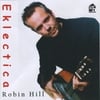
For the quartet version, found on, 'Eklectica', then try this page, 'Robin Hill and Eklectica Play 'Eternal Dance'.

Track 2: Hispanic Dance.

One of the posts relating to 'Hispanic Dance' gives details of the composer, Claude Bolling, and more information about the four members of 'Eklectica', alongside details of the seven movements featured in the concerto, of which Hispanic Dance is the first. 'Robin Hill Plays Claude Bolling's 'Concerto for Classic Guitar and Jazz Piano Trio'.

Track 3: Bach Invention No 8.

Bach invention was first mentioned, very briefly, here, and in a bit more detail with this post, 'Robin Hill and Peter Wiltschinsky 'Arrival'.
I must say, that the Bach, along with track 8 on Arrival, Felix Mendelssohn's 'Song Without Words No1 Op62', are two of my duo favourites.

Track 4: Fiesta de Xabia.

I should point out that no bulls were hurt during the inspiration for this piece. To understand how Fiesta de Xabia was conceived then read, 'Fiesta de Xabia' by Robin Hill - Guitar'.
As yet, this piece is not available to buy, but one of the advantages of reading a blog such as this one is that you get little taster of things to come!

Track 5: Tarantella - Suite Italiana.

Suite Italiana was composed especially for the Hill/Wiltschinsky Guitar Duo, which you can read about here.
This honour came about after Mario Gangi heard the duo performing one of his pieces, 'Suite Spagnola', which you can read about on the post, 'Track 4 - 'Arrival' - Mario Gangi'.

Track 6: Wheatfield Under Troubled Skies.

This is an orchestral composition by Robin and you may be surprised to hear there isn't a guitar in it!
It's a beautiful piece of music and there are more details on the post, 'World Premiere - 'Wheatfield under Troubled Skies' - Robin Hill'.

Track 7: Palace of the King.

Now for something completely different, and one that really does highlight the unusual twists and turns that a career in music can take.
This is true Rock 'n' Roll with some of the world's best. Read this, 'Deep Purple Haze Days'.

Track 8: Wizard of Waukesha.

This is one of Robin's bands, Hooper, and yes, the man in the picture with very long hair, and playing a Les Paul guitar, is Robin....take a look here.

Track 9: Fast Forward.

This song has been around for many years, and is another example of Robin on electric guitar, playing one of his own compositions. To find out more about Robin's band, 'Hooper', (which, incidentally, includes two BBC Philharmonic Orchestra players!) read, 'Robin Hill and Travis Bean...Rewind to Fast Forward.'

Track 10: Caprice No 7 - Legnani.

Another example of a track not yet available to buy, but our gift to you. Learn more about Legnani here.

Finally,

Track 11: Celebration.

'Celebration' is a song performed by another band Robin has been involved in. They made an incredible sound and had a phenomenal brass section. Check them out at, 'Force Ten To Be Reckoned With'.

So there we are.
A little bit of history attached to all the tracks currently in the player.
I can, and will, be adding new pieces from time to time, so be sure to keep checking!
Just follow the link and then 'click' on the desired track in the player.

Monday, July 16, 2007

Pianist Envy?

How does this classical guitarist relax?
The answer:
He plays the piano of course...
Just when I thought Robin had finished music making for the evening, this is what I found:


Robin is actually playing a piece he composed for piano and orchestra called 'Three Van Gogh Portraits.'
In this photograph he is playing the first movement, 'The Journey South', which depicts Van Gogh's train journey from Paris to Arles.
I wish you could hear it as it's one of my favourite movements.
However, you can hear the second movement, as I put it on the blog back in May.
Click here to read more about it and listen again.

Sunday, July 01, 2007

Music-Colour Synaesthesia and the Arts

Many artists and musicians talk about 'synaesthesia', a fascinating condition, which can take many forms.

For musicians the most interesting type is music-colour synaesthesia.
Here the individual experiences colours in response to tones or musical stimuli. Synaesthetes rarely agree that a tone will be a certain colour, although there are some trends, higher pitched notes, for example, are more brightly coloured.

It has been reported that colour changes in response to the pitch and it involves more than just the hue of the colour.
Brightness, (the amount of white in a colour, so as brightness is removed, red would fade to brown and then black), and saturation, (intensity of colour, with red being highly saturated and grey or black unsaturated) are also involved.

Colour synaesthetes also often report that colour will move or stream into and out of their field of view, and whilst some feel the colour is projected out into the world, others say the colours are experiences in their 'mind's eye'.

This is all fascinating stuff and there was an excellent article in 'The Daily Telegraph' the other day, by Martin Gayford, 'Art's brush with boogie-woogie'.
Here it's discussed how many figures in modern art have been fascinated by the relationship between visual art and music.

An example given is Vincent van Gogh. At one stage of his troubled life Van Gogh took music lessons from an organist in Eindhoven. His teacher concluded that Vincent was mad, as he constantly compared chords with colour pigments.
It appears that Van Gogh may have been a synaesthete.

In relation to this, an exhibition has just opened, 'Eye-Music:Kandinsky,Klee and All That Jazz' at 'Pallant House Gallery, Chichester'.
It looks like it's well worth a visit.

How does all this relate to Robin and him playing the guitar?
Well, the colour scheme in part of our house, is vibrant red and yellow.
What that tells us I'm not sure.

Tuesday, June 05, 2007

From 'All Quite at Sea' to Sgt.Pepper and the Short Stories to Vincent Van Gogh

All is very quite out in the Atlantic. I've been unable to speak to Robin since he set sail yesterday, and as yet, haven't received any e-mails. This is unusual as it is high priority for him to establish some contact with home. I can only assume, they are having some technical difficulties on board the QM2, which will be resolved soon.
So, for today, it's just you and me!

After my blog about the re-creation of tracks from the 'Sgt.Pepper' album, there was a huge increase in traffic to the site. Not surprising really, but I was very pleased to find that many new visitors, stayed on to have a good look around. So, hello to you all, and do keep checking in.

Related to The Beatles blog, BBC Radio 4, are running a series all week. Five writers, all with Liverpool connections, have each chosen a track from Sgt.Pepper, and used it as the inspiration to write a short story.
Yesterday was, 'Being for the Benefit of Mr Kite', by Heidi Thomas.
Today, at 3.30, is 'With a Little Help from My Friends', by the fabulous Alexei Sayle, Wednesday will be 'Lucy in the Sky with Diamonds', by Linda Grant, Thursday, 'A Day in the Life', by Jimmy Mulville, and finally on Friday, 'Sgt Pepper's Lonely Heart Club Band', by Laurence Wilson.
Read more about it on the BBC 4 site, and follow the links to listen again for up to seven days.

I also discovered this YouTube video, via artsJournal, 'Did Van Gogh trace his self-portraits?'


From this post, a short time ago, you will realize we are big Van Gogh fans here.
Whatever the final verdict, as far as I'm concerned, the skill is in the painting, no matter how the outline got there.
It seems unlikely that photography was used, because as far as I was aware, only one photo of Vincent existed, and it's very frustratingly of the back of him, as he walks away. Is the photo in the video authentic? I'd love to hear if anyone knows differently.
The camera obscura may have been an option, but once again, that doesn't account for his skill with the paint.

Meanwhile, back home, I think I'll start looking into the possibility of carrier pigeons.

Friday, May 25, 2007

World Premiere - 'Wheatfield under Troubled Skies' - Robin Hill

So, here it is.
We finally managed to sort out our technical difficulties, and you are now able to listen to the world premiere of, 'Wheatfield under Troubled Skies'.
But first, let me set the scene.
This piece was composed about three years ago and it may surprise you to find that there isn't actually a guitar within earshot!
It is from a work for piano and orchestra - 'Three Van Gogh Portraits'.
The first movement, (The Journey South) depicts Vincent's train journey from Paris to Arles, and the third, (Yellow House) describes the frenzied creativity and energy of the artist's studio. The second movement, which can be listened to today is 'Wheatfield under Troubled Skies'.

Robin has always had a fascination for Vincent Van Gogh. The title, 'Wheatfield under Troubled Skies', is taken from one of Van Gogh's most dramatic works painted during his final creative period in Auvers.
The painting depicts a wheatfield, literally under a dark, oppressive, and threatening sky. There is an uneasy, brooding feel about the whole image, which reflects his sombre and desperate mood. The sun tries to break through occasionally but is doomed to failure.

With that in mind, we approach the music.
The opening theme is sparse and bare, stated on solo piano, and reflecting a scene of great beauty but all here is not well.....

As the movement progresses it has a rural, pastoral feel, with each appearance of the piano, getting ever more complex and involved, yet retaining the dark mood and reflecting the inner struggle in Van Gogh's mind.
The movement culminates with a rumour of thunder represented by a distant glissandi on the timpani.

The score itself was composed using Sibelius software and, on this recording, is played through a Roland 1080 sound module.
This is, of course, a pale substitute for a real orchestra, but gives a rough impression of the how the work sounds. We hope to record this piece for real in the very near future.. all we need is an orchestra and pianist...anybody out there?....

Listen, and I hope you enjoy. (Click on play and wait a few seconds for the piece to start)


Subscribe Free  Add to my Page