Mauro Giuliani (1781-1829) was born near Bari and was an Italian guitar virtuoso and composer.
He studied the cello and counterpoint, but the six-string guitar became his principle instrument early in life.
Earlier the five string guitar, known as a 'French guitar' was popular, but the instrument lagged behind the more popular lute and mandora. Once the sixth string was added, bottom E, the 'modern' guitar could at last reach the rank that the mandora had held in the musical world.
There were many fine guitarists in Italy at the beginning of the 19th century (Agliati, Carulli, Gragnani, Nava, etc), but many moved north in order to make a living.
Public interest at the time lay with opera and the guitar was seen as an accompaniment instrument. Giuliani did in fact write many works for voice and guitar throughout his life.
At this stage Italy didn't reward the talented individuals who chose to play the guitar as a solo chamber instrument.
Also, the sound level of a classical guitar circa 1800 was diminutive compared to other contemporary instruments, therefore making it difficult to be heard in the typical Italian theatre.
There was also widespread political instability at the time causing many conservatories to close, and along with a lack of competent publishing houses, there were enough reasons for Giuliani, and many others, to leave.
He settled in Vienna in 1806 and quickly became famous as the greatest living guitarist and a notable composer.
In 1808 Giuliani gave the premiere of his guitar concerto, with full orchestra, to great public acclaim.
From then on he led the classical guitar movement in Vienna, teaching, performing and composing a huge number of works for the guitar.
Giuliani moved in elite circles, in 1813 he played the cello in the premiere of Beethoven's Seventh Symphony, in the company of Hummel, Mayseder and Spohr.
Giuliani had two talented children, Michel, who became a 'professeur de chant' at the Paris Conservatoire, and Emilia, who was also a famous guitar virtuoso and composer.
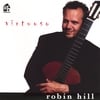
'Esercizio' by Giuliani, track 20 on 'Virtuoso', is, as it says, an exercise, or study. But like all the best studies it has huge musical value and isn't purely concerned with the mechanical aspects of playing the guitar.
Showing posts with label Beethoven. Show all posts
Showing posts with label Beethoven. Show all posts
Friday, December 07, 2007


Monday, December 03, 2007
Robin Hill and 'Recuerdos de la Alhambra'
'Recuerdos de la Alhambra' is the 18th track on 'Virtuoso' and was composed by Francisco Tarrega (1852-1909).
Tarrega was born in Villarreal, Spain, but as a child had an accident, fell into an irrigation channel and permanently damaged his eyes.
His parents were concerned that he may loose his sight completely, so, they moved to Castellon, so that Francisco could take music lessons and would therefore be able to work as a musician if he did go blind.
Thankfully he didn't lose his sight but he did become a highly influential musician.
When Tarrega began his studies on the guitar, the instrument was at a low ebb throughout Europe, overshadowed by the louder and more resonant piano.
So Tarrega's father insisted he learn both instruments, in which he quickly became accomplished, in order to keep his options open.
It was in 1869 when Tarrega acquired an unusually loud and resonant guitar, made by Antonio Torres, the famous luthier, that Tarrega was able to prepare the way for the rebirth of the guitar in the 20th Century.
Tarrega transcribed many works for guitar by Spanish composers Albeniz and Granados, along with adapting movements from Beethoven's piano sonatas and many preludes of Chopin.
In all, Tarrega composed approximately 78 original works and 120 transcriptions for solo guitar, along with 21 transcriptions for two guitars. He also composed many varied and extremely taxing exercises which have tormented generations of guitarists ever since but which are extremely effective in the development of technique.
Recuerdos de la Alhambra was composed around the turn of the century. The theme was conceived on a visit to Grenada and the music is evocative of the famous Moorish palace there.
The piece is a tremelo study which requires great technical ability. To maintain a fluent and smooth tremelo, whilst executing clear accompanying notes, and also conveying the emotion of the piece, is not an easy task.
Robin is often asked if his hands ache after playing a piece like this. But years of right and left hand exercises have ensured he is quite able to maintain the tremelo for the required 3 minutes and 16 seconds on this recording. In fact, just like any athlete, the training is all important, so when it comes to the event itself, you really don't consider finger fatigue!
Monday, November 26, 2007
A Professor Calls and 'Luna Bianco'
A little light relief for a cold November day.
My grandmother came to spend the day with us here at the weekend.
Over lunch Robin announced that a rather eccentric Professor of music was calling round later in the afternoon.
'Friederich', the prof, specialises in old manuscripts, and had some pieces that he wanted Robin to take a look at.
My grandmother was very excited about this. She worked at a university for many years and has always enjoyed stimulating conversations.
Robin stressed that Friederich was quite a character, and, prone to arriving early for appointments.
He then made a big deal of preparing to take the dogs for a walk, whilst in reality he shut the poor canines in the kitchen, and hid upstairs.
Some time later the doorbell rang and son number one dutifully answered it, making polite conversation with the Professor in the hallway, before bringing him into the lounge and introducing 'Friederich' to 'Gran'.
After initial introductions, the professor pulled out the precious manuscripts from his battered briefcase and proceeded to extol the virtues of this fabulous music.
By this time I had also entered the room, and the prof excitedly pointed out bar 25, and started to sing along as he followed the music with his finger. All done very loudly and with rather eccentric hand gestures.
I left the room as the professor asked my grandmother, "Do you love ze muzic of Ludwig Van Beethoven?"
"Oh yes", she replied.
"Iz ze maestro returned from his valk yet?"
"No, not yet", was my response from the hall where I was taking refuge.
After further small talk and manic gesticulation from the professor, he announced that he needed to play this, 'sublime phrase' on the piano, and left the room.
Poor grandmother was looking decidedly bemused by the whole experience and asked son number one if the Professor was alright.
To which he replied, "Yes, of course".
But we couldn't keep the illusion up any longer, and Robin reappeared, pulling off a wig and glasses as he entered.
Fortunately Gran took it all in the spirit it was intended and hasn't stopped chuckling about it since.
This is the Professor, in all his glory:

The wig was from the children's fancy dress box, and the shirt, well, that's a real 1970's shirt, a memento from a tour Robin did with Atarah Ben Tovim.
I'm just hoping that Robin hasn't taken this outfit over to Leeds University where he's teaching today...
It's also hard to believe that the same professor composed track 14 on Virtuoso.
'Luna Bianco' has a slow bossa nova groove with a short improvised solo in the middle.
The piece was inspired by the music of Antonio Carlos Jobim, which Robin has long admired and loved.
Tuesday, November 20, 2007
Track 5: 'Arrival of the Queen of Sheba' - Handel and Cecilia Bartoli's 'Maria'
George Frideric Handel (1685-1759) began composing at the age of 9 having already shown considerable musical talent on the harpsichord and pipe organ.
He had a turbulent relationship with his father who insisted he studied law in 1702. However, after his father's death, Handel abandoned law for music.
He lived for some time in London, at 25 Brook Street, which is currently the 'Handel House Museum'.
I know that this is well worth a visit, as Robin went a few years ago, and thoroughly enjoyed a personal tour by a very knowledgeable guide. He came home inspired by his visit and full of numerous anecdotes. He was doubly delighted to find that Jimi Hendrix had lived in the house next door!
Handel was a composer that was, and is, held in high esteem by fellow composers.
In 1824 Beethoven is quoted as saying:
"Handel is the greatest composer who ever lived. I would bare my head and kneel at his grave."
Bach:
"Handel is the only person I would wish to see before I die, and the only person I would wish to be, were I not Bach."
Mozart:
"Handel understands effect better than any of us. When he chooses, he strikes like a thunder bolt."
Really you can let the music speak for itself.
Robin originally recorded his own arrangement of 'Arrival of the Queen of Sheba' with Peter Wiltschinsky on their album, 'Virtuoso Music for Two Guitars' on the Hyperion label.
I was interested to find that details of this album are held in the 'International Guitar Research Archive', in the Oviatt Library on the campus of California State University.
Today's version of the 'Arrival of the Queen of Sheba', which comes from the oratario, 'Solomon', is a solo guitar and orchestra arrangement. The piece is eminently suited to performance on the guitar with its rapid scales and arpeggios, the original dialogue between two oboes being replaced by guitar and recorder.
When you have finished downloading this piece, I strongly recommend you go over to iTunes and download Cecilia Bartoli's new album, 'Maria'.
It's fantastic, and you can read all about Cecilia's passion for the Spanish mezzo-soprano, Maria Malibran, here, in an article by Rupert Christiansen.
Thursday, August 30, 2007
Classical Music and Growing Children...
A much happier man!
The second and last guitar concert on the QM2 went very well.

Despite feeling like he had someones toenails glued to two finger ends the concert was a success and the audience enjoyed it.
Robin had a lot of very positive feedback which is always nice.
He decided to relax back in his room afterwards by practicing the Bach Prelude from Lute Suite No.4!!
I suspect he also went out later for a meal and a few well deserved drinks...
Meanwhile here in the UK, Nic Fleming has been reporting that, 'Beethoven can help crops grow more quickly.'
It can in fact be classical music in general. I have a strong suspicion that the same applies to children.
You wouldn't believe the number of shoes I have just had to buy.
I think I'm going to have to get Robin to do 'silent practise' on his return in an attempt to slow down their growth rate...
Wednesday, July 18, 2007
Organ Donation Awareness to Mood Changing Music
Blogcatalog are running a 'Community Organ Donation Awareness Campaign', which, as the title suggests, plans to highlight the need for more organs for transplantation.
For more information on the UK statistics visit 'UK Transplant'.
How does this fit in with the life of a classical musician you may ask?
Well I'll tell you.
We have first hand experience of the benefits of organ donation.
A very significant person in our lives was lucky enough to be one of the few on the waiting list to receive a new heart.
As you can imagine this was preceded by years of failing health and distress to all concerned.
The 'call' from the hospital informing us a match had been found was equally difficult to comprehend.
Hospitals have strict assessments for anyone on a waiting list, as they have to be able to cope with not only the physical strains of the procedure, but also the emotional ones.
After many tense hours, the operation was completed, but it was a few days until the worry started to subside.
It's actually quite amazing how quickly someone recovers, and within a few weeks, are back at home in a much better state of health than prior to the operation.
Robin was obviously involved with the whole event. Regular visiting, boosting moral, and generally supporting the rest of the family, not to mention continuing his performing career and looking after son number one, as we went through this stage of our lives.
One thing that remained at the front of all our minds was the 'gift of life' we had been given - literally. We had the pleasure of Tony's company for seven more years, it would only have been days or possibly a few weeks at most without the transplant.
The donor family were, and still are, often in our thoughts.
This is a difficult concept for anyone to deal with.
Their loss was our gain. But we never forgot that.
Little information is given about donors, but we did know that it was a 19 year old boy.
The strange thing is, that Tony suddenly developed a liking for pizza, which he had never previously enjoyed.
I've heard of other cases where likes and dislikes change. So I hope that donors can take some comfort from the fact that part of their loved one very definitely lives on.
But could musical taste also be altered. We know from research that music can most certainly affect mood. There's a very interesting article by Nic Fleming discussing just this. Listening to music releases dopamine which results in a sense of happiness. You can read the article here.
Can musical memories be passed on? I'd love to be able to give you an answer to that one and tell you that Tony suddenly developed a taste for rap music, but as I don't know the musical tastes of the donor, and, Tony had a hugely eclectic taste anyway, I'm afraid I can't say.
Suffice to say that making more organs available for transplants can only be a good thing. And music, well all the surgeons I know, play music in the operating theatre to aid their relaxation. This can be anything from Meatloaf to Beethoven...
Tony's surgeon listened to Oscar Peterson for his operation...
Saturday, July 14, 2007
From Proms to Psycho
What a delight.
To turn on the television and find the 'First Night of the Proms' in full swing. The joy of watching musicians perform, to a packed house, could only have been bettered if I had been in the audience myself.
Unfortunately Robin was out all evening and therefore missed the lot. He did 'phone home at one point and was very envious that I was currently enjoying Beethoven's Ninth Symphony.
It was pretty late when Robin got home but he was very excited about a purchase he had made earlier in the day.
A box set of 12 Alfred Hitchcock films.
So despite the hour we chose to start with Hitchcock's masterpiece, 'Psycho'.
This has long been a favourite of ours and it amazes me that every time I watch it I see something new.
Each shot carefully thought out and planned, with the famous 'shower scene' taking seven days to shoot, using seventy camera setups, and the final take only lasting 45 seconds.
What makes the whole 'Hitchcock' experience even better is of course the music.
The inspirational score was composed by Bernard Herrmann.
Herrmann was born in New York in 1911 and studied at New York University and the Juilliard School.
As well as a composer, Herrmann was a conductor, and at the age of 20 formed the New Chamber Orchestra.
Herrmann was particularly interested in new and rarely performed works, and gave the American premiere of many English works including Walton's First Symphony.
As a composer for the cinema Herrmannn proved himself a master at providing a psychological edge and dramatic tension through his music.
This is what we were admiring late last night.
The film 'Psycho' is an all time classic and the score cranks up the tension with every scene.
One feels that Stravinsky must have been an inspiration, especially with the frenetic, motor rhythms, which instantly identify the film.
This is then contrasted with a release of tension as the soaring, lyrical second theme takes over.
Pure genius.
George Martin has remarked that Bernard Herrmann's score inspired him to write the string quartet arrangement for The Beatles, 'Eleanor Rigby', a perfect artistic symbiosis.
If you are not familiar with the film 'Psycho' then I strongly recommend watching it. You must be over 15, and be warned, you may well prefer to take a bath in the future...
Subscribe to:
Posts (Atom)











 Posts